So What Does a Marketing Agency Actually Do?
A marketing agency plans, creates, and manages the marketing work your business needs. Things like strategy, content, advertising, design, SEO, and reporting, using a team that already knows how to do all of it well and already knows how to work together. You’re not hiring one person and hoping they’re secretly great at graphic design, ad strategy, copywriting, and search engine optimization all at once. You’re hiring a team built to cover that range.
Here’s our take: the actual product isn’t the post, the ad, or the blog you see land in your inbox. It’s everything that had to happen correctly before that piece was ready to show you: the strategy behind it, the research, the coordination between the people who made it, and the judgment call that it was actually good enough to send. A marketing agency’s job is to own that whole process so it doesn’t become one more thing on your plate.
That’s the short version. “Marketing agency” gets used to describe a lot of very different setups, though, so what you’re actually paying for is worth understanding in more detail before you hire anyone.
The Services You Can Expect From a Full-Service Agency
A full-service agency typically covers strategy, consulting and project management, branding and visual identity, website design and development, social media management, content creation, photography and video, SEO & AIO, blogging, digital advertising, email marketing, and more. That’s a long list, but the important part isn’t the list itself. It’s that these pieces are meant to work together instead of operating as separate, unrelated tasks that happen to share an invoice.
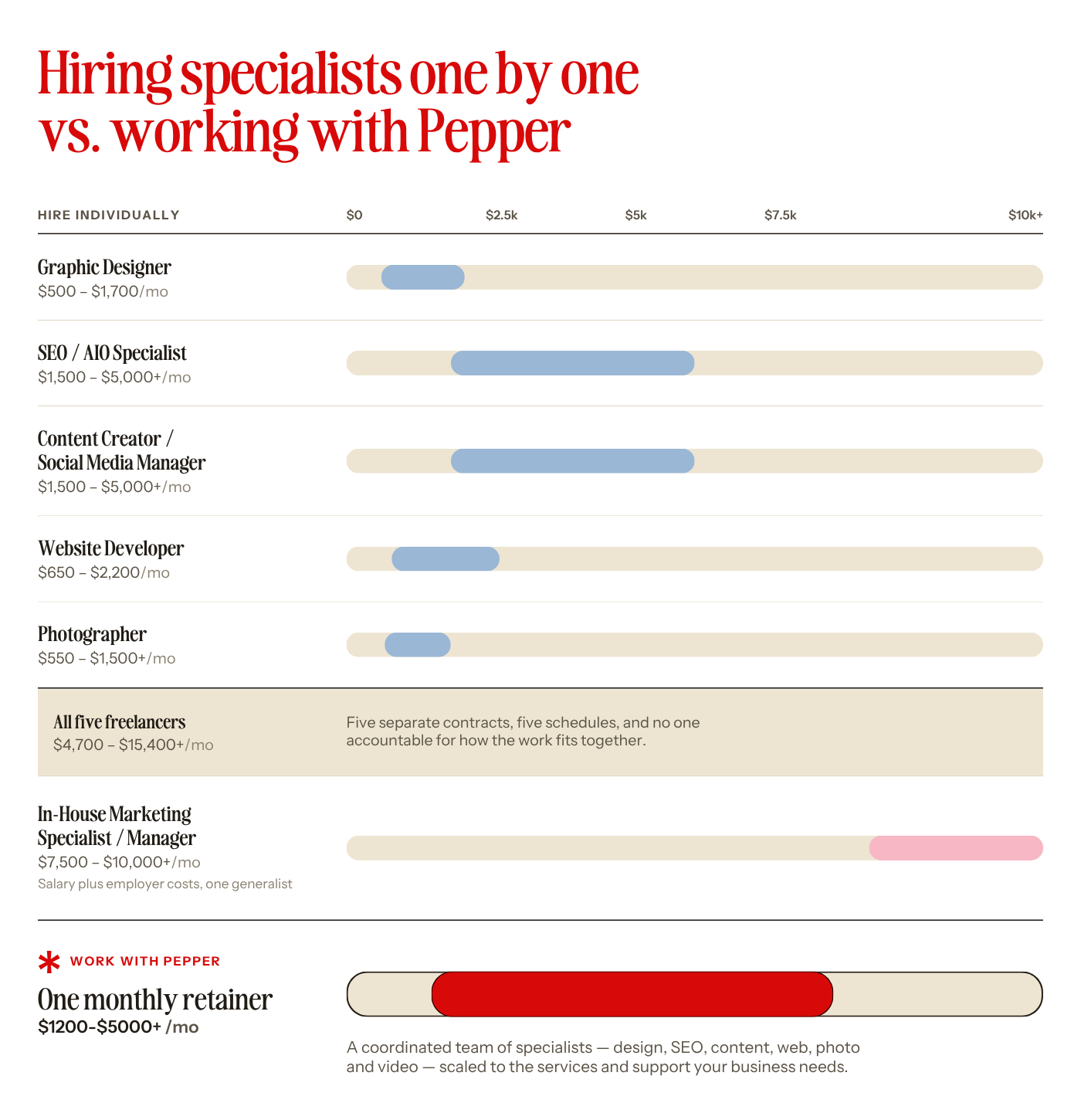
If you tried to hire one person to handle all of your marketing, you would need them to be great at design, SEO/AIO, social media, web, photography, copy, and ads. Realistically, most in-house marketers are generalists, and an experienced hire often costs around $80,000 to $110,000+ per year before benefits and other employee expenses.
Hiring those specialists separately as freelancers can easily run $5,000 to $15,000+ per month, and then you are the one managing everyone.
A full-service agency gives you access to specialists who already work together. At Pepper, retainers range from roughly $1,200 to $5,000+ per month depending on what you need. Your website, SEO, AIO, content, ads, branding, photography and social media management all support the same strategy instead of working in separate little universes.
And if you do find one person who is an expert at all of it, please send them our way. We need to meet them, and possibly poach them (kidding, sort of).
What Working With an Agency Actually Looks Like Day to Day
Most of what an agency does happens before you ever see it. Strategy gets planned, drafts get made and revised, platforms and best practices get tracked as they shift, and all of that stays behind the scenes until it’s actually ready for your eyes. What you get is the finished piece. What got you there is a lot more than that one piece.
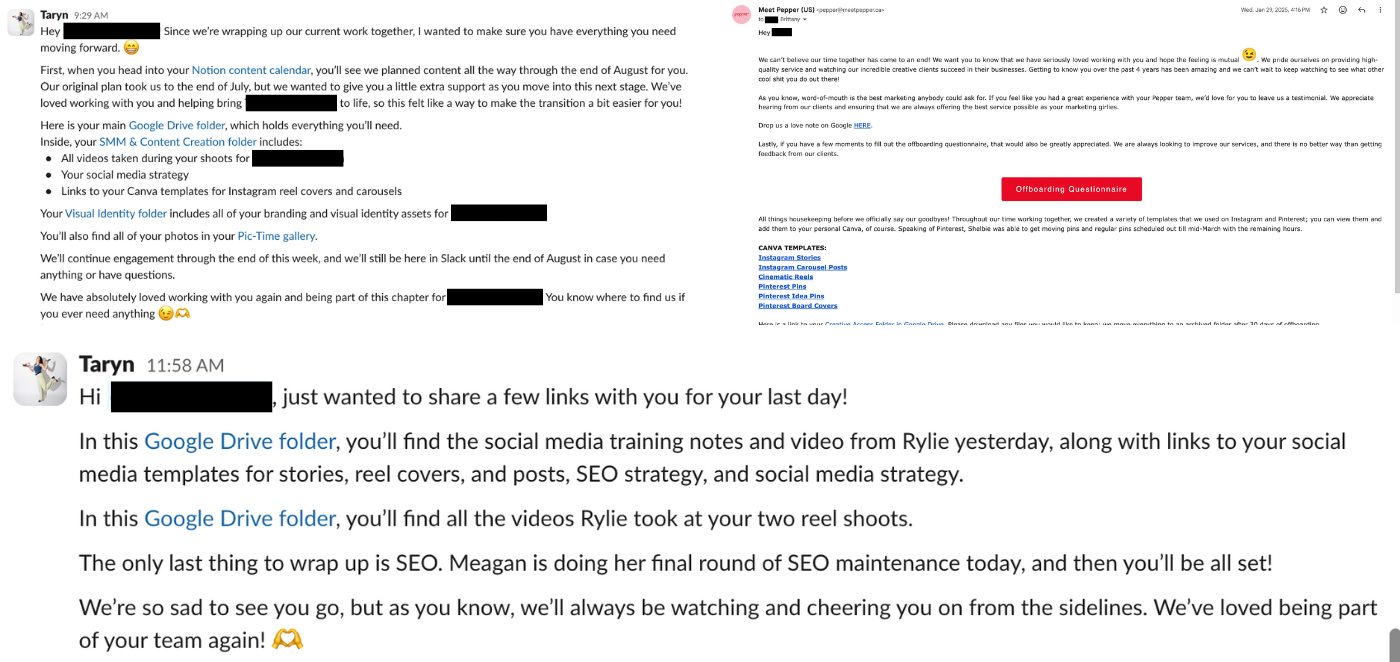
Holding all of that together is usually one person’s job: your project manager. At Pepper, our PMs coordinate the team, track timelines, and keep the strategy consistent across everything we produce for you, so you work with one team that already manages itself instead of five specialists you manage yourself.
That coordination only works because of what happens at the start. Onboarding is where we learn your business, your goals, your brand voice, your audience, so we’re not circling back to ask you to re-explain yourself six months in, and this part is non-negotiable.

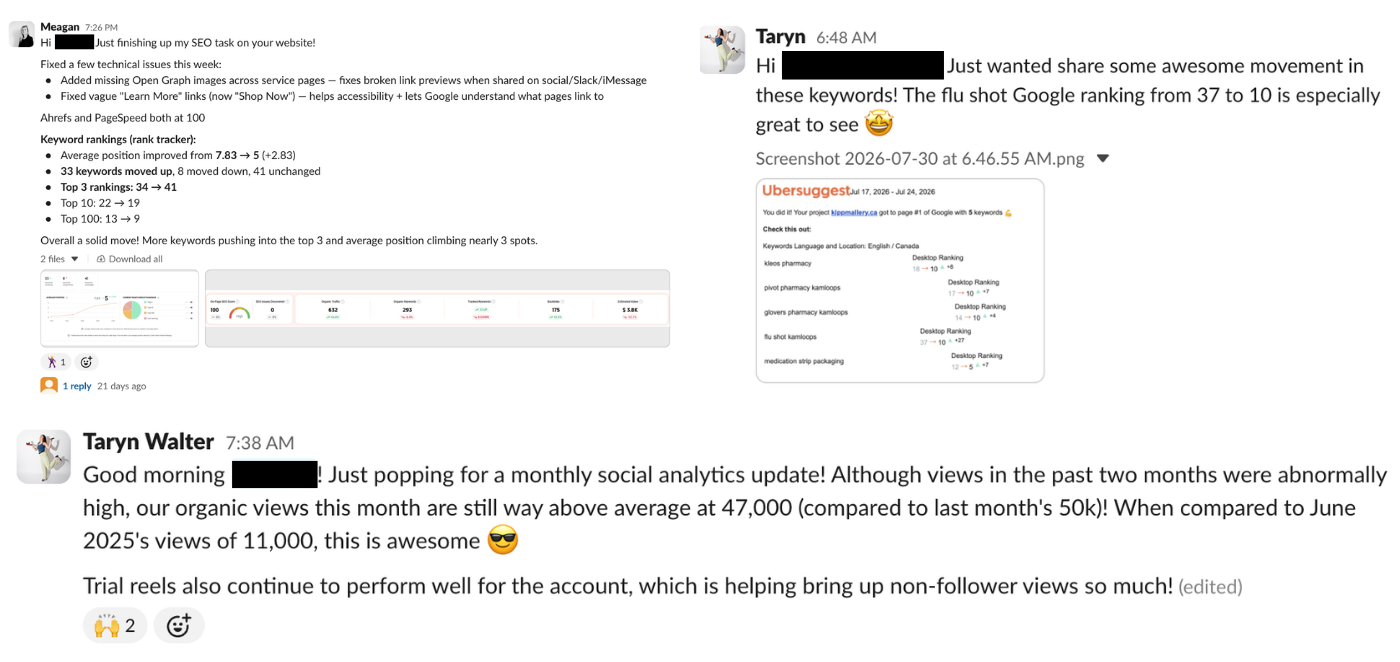
From there, day-to-day communication happens mostly through Slack, a free messaging app available on desktop and mobile, which feels closer to texting your marketing team than waiting on an email chain. There’s a reason we work this way. Research around Slack and workplace collaboration has found faster response times, quicker approvals, fewer emails, and stronger team connection. Slack reports teams receiving 43% faster responses from customers, vendors, and service providers, while teams using Slack Connect have reported creative reviews and approvals moving up to 2x faster. We respond within roughly 24 to 48 business hours, usually sooner, and if someone’s away on vacation, you’ll know before it becomes a mystery.
You still stay involved, just differently than you would managing freelancers yourself. You review what needs your approval and weigh in where your business knowledge matters. We keep the process moving, reduce the back-and-forth, and make sure feedback gets to the right person quickly. You own the parts only you should own, while our team handles the coordination, communication, and next steps.
What a Marketing Agency Is Not
A marketing agency isn’t a sales team, and it isn’t a fix for problems that live somewhere else in your business.
We can get the right people in front of you, build awareness, generate traffic, and move people through your marketing funnel. What happens once someone calls, adds to cart, walks in, or fills out a form is outside our control. That’s why we won’t promise a specific number of sales. We’re not standing behind your counter closing the transaction, and guaranteeing something we don’t fully control wouldn’t be honest.
The same goes for rankings, leads, and revenue. We’ll set goals (and usually always hit them, might we add!), measure performance, and optimize toward outcomes that matter to your business. Guarantees on any of that are a red flag, not a selling point, no matter which agency is making them.
Marketing’s job is to get the right people to the opportunity. What happens next is part of a much bigger picture, including plenty of things outside any agency’s reach. That’s no shade on any business; it’s just where the line naturally sits, and it’s worth knowing it’s there.
Being upfront about that line is part of what makes an agency relationship work. You should know exactly what you’re paying us to do, and we should be honest about what still depends on things beyond our control.
Is It Worth It? How to Know If Your Business Is Ready
There’s no universal point where a business becomes “ready” for an agency. We’ve worked with companies that operated for decades before hiring their first one, and with people who came to us before they’d even finalized a business name. Both needed real support, just very different kinds of it.
The better question is what type of support fits where you are right now.
DIY marketing can work in some cases, especially early on when you’re wearing every hat anyway. But most owners have a to-do list that starts with invoices, payroll, staff, and clients, and marketing sits somewhere further down. When the day gets busy, it’s usually the first thing pushed to tomorrow. Then next week. That’s not a lack of care; it’s just where attention naturally goes.
A freelancer can work well for a single, well-defined task. Where it gets complicated is when you’re coordinating several freelancers at once, one for social, one for your website, another for ads, because at that point you’re the one making sure they’re all pulling in the same direction. That coordination is real work, and it’s easy to underestimate how much time it takes.
An in-house hire brings dedicated attention, but expecting one person to be excellent at strategy, design, SEO, and Meta & Google ads simultaneously is a tall order, and a costly one if it doesn’t work out.
What to Look for When Evaluating a Marketing Agency
Evaluating a marketing agency mostly comes down to two things:
- how the relationship is structured
- how much visibility you’ll actually have into your own marketing once it starts
Ownership and access are a good place to start, because they’re usually easy to check before you sign anything. Ask who owns your website once it’s built, who has access to your advertising accounts and analytics, and what happens to your photography, videos, and templates if the relationship ever ends. In a healthy agency relationship, the answer to all of these is the same: they belong to your business, and you can see them whenever you want to. Real-life red flag: if an agency or freelancer tries to hide logins, data, or even attempts to make it difficult for you to edit your own website, that is a big red flag, and it happens more often than not, unfortunately.
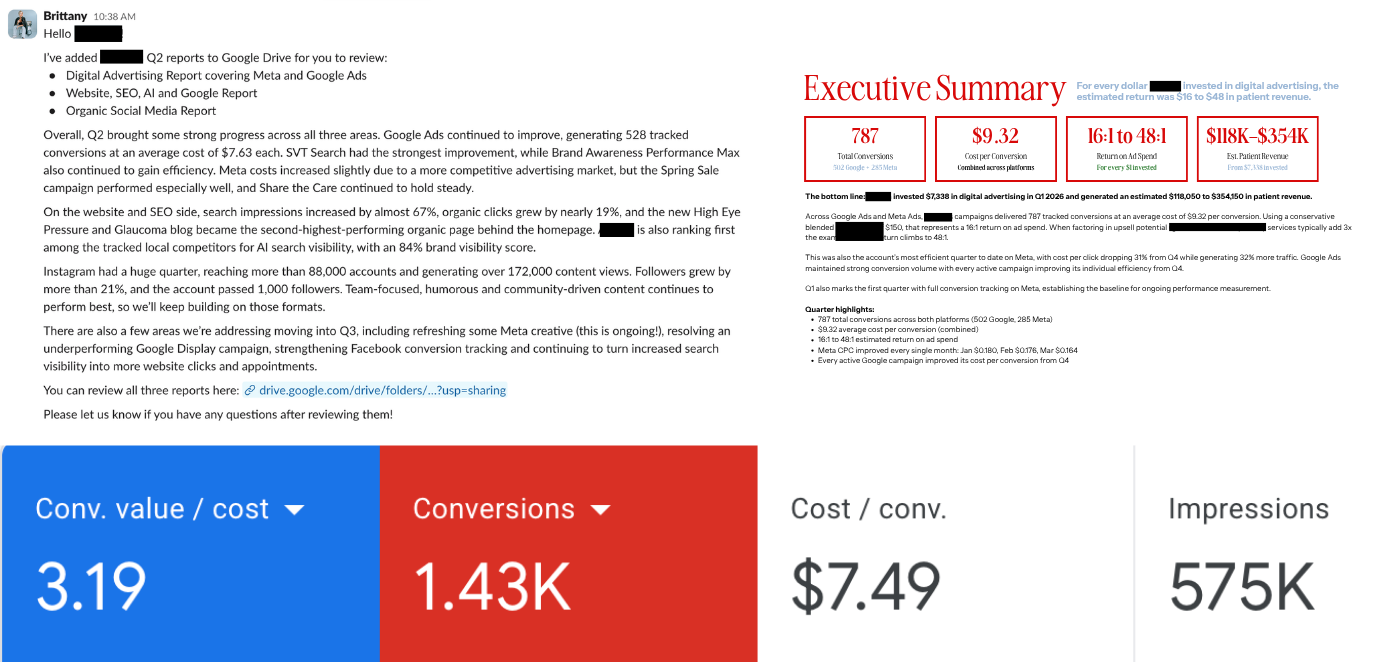
From there, look at how results get reported. Different services measure success differently. Organic social often relies on how many people made it through the marketing funnel through organic traffic, views, reach, impressions, and engagement, since attribution back to a sale isn’t always possible. Paid advertising, SEO, and AI visibility usually offer clearer lines to traffic, leads, and conversions. What matters is whether the reporting connects those numbers back to your actual business goals, rather than just presenting the metrics that happen to look best that month, and whether it explains underperformance with the same clarity as a win.
Communication structure is worth understanding too. You should know who your main point of contact will be, how quickly you can expect a response, and whether you’ll have visibility into your account between scheduled check-ins. A clear answer here often says a lot about how the rest of the relationship will run.
Finally, pay attention to how specific the proposed strategy is to your business. A strategy shaped by your actual goals, audience, and competitive landscape will look different from a template applied the same way across every client, and that difference usually shows up early, before you’ve even signed anything.
How Pepper Works With Businesses Across BC
Pepper is a full-service agency based in Kamloops, BC, working with businesses across the BC Interior and beyond (yes, we will work with your business no matter where you are located in Canada!). We’ve built campaigns and strategies for dermatology and aesthetics clinics, eye care practices, septic services, wineries, cideries, golf courses, pharmacies, counselling practices, appliance retailers, photographers, home builders, realtors, and plenty of others across industries. That range shapes how we work. We don’t rely on one formula and apply it everywhere. We start by understanding the business in front of us, then build the strategy from there.

That starting point carries through into how the team is structured. Strategists, graphic designers, content creators, ad specialists, and SEO and AI specialists all work on your account, coordinated by a project manager who knows it well enough that you’re not repeating yourself every few months.
The same approach carries into reporting, access, and ownership. Your advertising accounts, analytics, website, and creative assets belong to your business, not to us. If something underperforms, we’ll say so and explain what we’re changing, rather than digging for the one number that looks better that month.
Wherever you’re based in BC or the rest of Canada, the goal is a relationship that feels less like hiring a vendor and more like adding a team that already understands your business and keeps showing up for it.
If you need a little more convincing, or you want to just talk about your goals, you can always book a free discovery call with us. We love to yap, especially about marketing.
Frequently Asked Questions
- What does a marketing agency do on a daily basis?
On any given day, an agency coordinates strategy, creates or revises content, manages advertising campaigns, tracks performance, and communicates with clients about what’s ready for review. Much of that work happens behind the scenes. Planning, internal coordination, and quality checks happen before anything reaches a client’s inbox.
- Is it worth hiring a marketing agency for a small business?
Generally, yes. Most small businesses don’t have the internal capacity to do strategy, photography, content, advertising, SEO, AIO, and design all well at once, and marketing tends to get pushed aside when the rest of the business gets busy. An agency takes that off your plate and keeps it moving consistently, which is usually the difference between marketing that actually builds momentum and marketing that happens in bursts whenever there’s time. The main question isn’t really whether it’s worth it; it’s finding the right fit for your budget and stage.
- What is the difference between a marketing agency and a freelancer?
A freelancer typically handles one specific service, while an agency coordinates a team across multiple services under one strategy. Hiring several freelancers can work for simple needs, but someone still has to make sure they’re all working toward the same goals. An agency builds that coordination in from the start.
- What does a digital marketing agency do differently from a general one?
A digital marketing agency, which is what Pepper is, focuses on the channels where most people are actually spending their time now: SEO, AI Optimization across all platforms, digital advertising, social media, content creation, photography, video, email marketing, graphic design and branding, and your website, all working together as one connected ecosystem. A more traditional or general agency tends to lean on things like radio, TV, direct mail, or broad brand campaigns, sometimes offering digital as an add-on rather than the core of what they do. Neither approach is wrong, but if your customers find businesses online, working with an agency built around digital from the ground up is often the more direct path to reaching them.
- How do I know if I’m ready to hire a marketing agency?
You’re likely ready when marketing consistently gets pushed aside for more urgent parts of running the business, when the pieces you’re managing yourself aren’t working together, or when growth has reached a point where consistent, coordinated marketing matters more than it used to. There’s no universal readiness marker. It’s more about whether your current approach keeps up with where the business is going.