Why Generic Marketing Advice Doesn’t Work for a Small Budget
Google “marketing strategy for a small business” and you’ll get the same list of small business marketing ideas from every major site: post on social media, start an email list, invest in SEO, run some ads, make more videos. All technically true, but none of it tells you what to actually do on a Tuesday morning when you’ve got two hours, no marketing team, and a business that still needs running while you figure the rest out.
That advice wasn’t written for you. It was written for someone with a marketing department, a media budget with an extra zero on the end, and a specialist to hand each idea off to. You’re one person, trying to be your own strategist, copywriter, photographer, and ads manager, while still doing the job the business exists to do. That’s a lot of job titles for one person. You deserve a few claps if you’re nodding your head 👏🏼!
So the real question was never “should I be on social media?” It’s “out of everything on this list, what earns my time and money first?” because there’s no version of this where you do all six well consistently on your own.
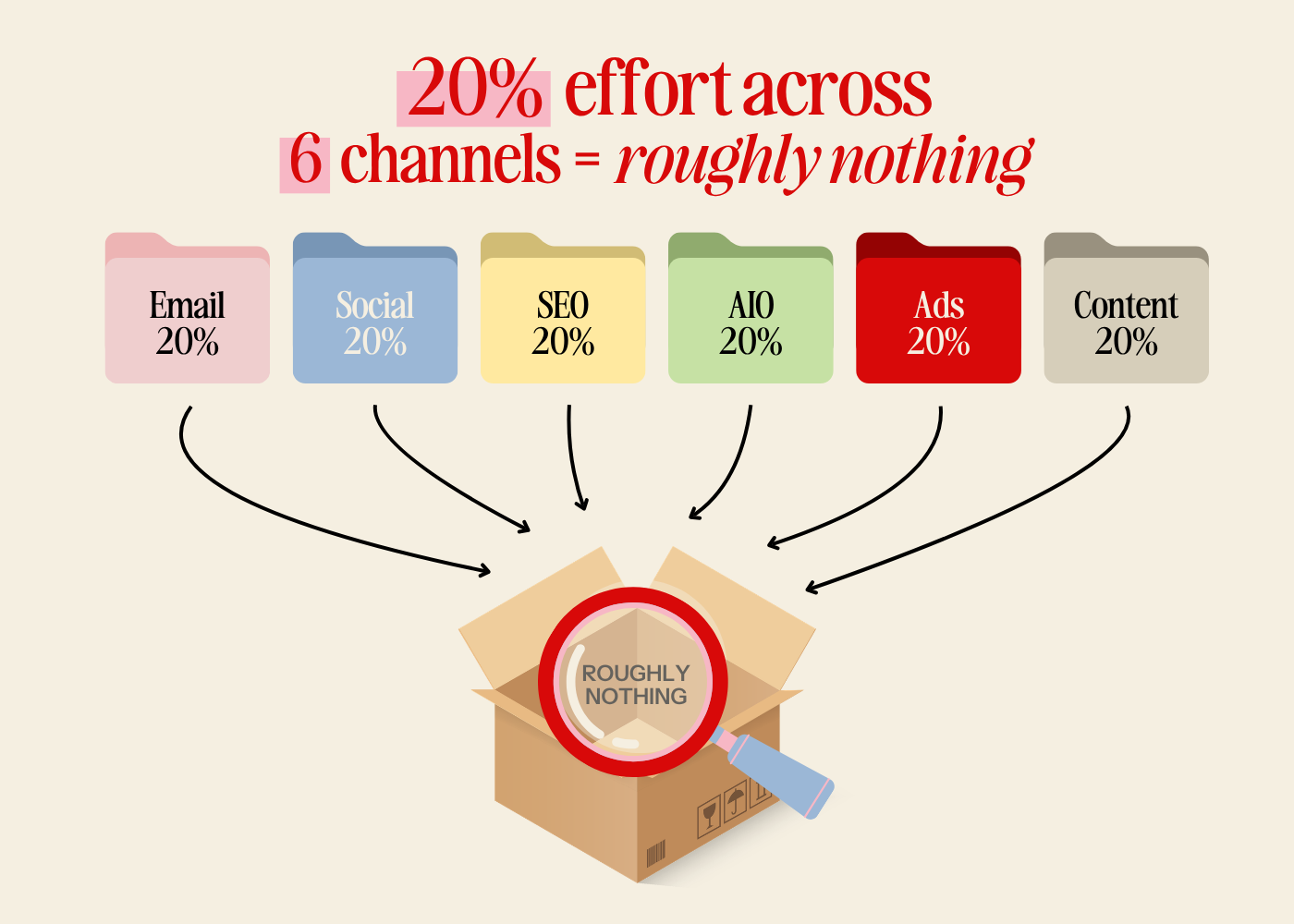
That’s the part most marketing tips for a small business skip: prioritization!! A listicle can tell you your marketing efforts include email, social, SEO, AIO, ads, and content. It can’t tell you which deserves your attention first, what can wait, or how to build from there without torching your budget on five half-efforts. That’s usually what happens instead: an Instagram post every few months, a random Google ad, an email list nobody’s nurturing, and a website with photos from 2013. According to our calculations, a 20% effort spread across six channels adds up to… roughly nothing.
The businesses making real progress on a small budget usually aren’t doing more than everyone else. They’re doing less, on purpose, but doing it properly. That’s not a lesser version of a real strategy. It’s the strategy. So instead of another list, here’s how our team at Pepper actually thinks about the order you tackle it in.
The Foundation Every Small Business Needs Before Spending on Marketing
There’s no single checklist here; what comes first depends on your industry, goals, and what you’re actually trying to sell. But a few things need to be true before you spend real money driving people toward your business.
Start with clarity. What do you actually offer, who is it for, and what do you want someone to do once they find you? It seems obvious, but it’s the thing almost nobody nails down before they start spending. Without it, more traffic doesn’t get you more customers, just more noise.
Then you need somewhere credible to send people. For most businesses, that’s a functional website with clear messaging, consistent branding, and an obvious next step. Someone clicks your ad, finds you through Google, or stumbles onto your Instagram at 11 pm. What happens next has to make sense, or you didn’t get a customer; you got a bounce. The rule that doesn’t bend by business type: your destination needs to be ready before you spend heavily to send people there. Running ads or pushing content before your website, offer, or brand can hold up means paying for attention you haven’t earned the right to keep yet.
Branding belongs in the foundation too, and we mean the whole thing, not just the logo.
Your colours, fonts, voice, messaging, photography, website, and social presence should all sound and feel like the same business. If your website looks buttoned-up and your Instagram looks like a different brand entirely, that’s a brand problem, and it’ll undercut marketing money you spend until you fix it.
Priority shifts by business from there. Local service businesses often need Google and local search visibility sooner. Visual businesses need strong photography and social content earlier. B2B companies usually lean harder on the website and search presence than a flashy feed. But again, this isn’t a one-size-fits-all situation.
So this isn’t a “foundation vs. nice-to-have” checklist. The real foundation is a clear offer, a clear audience, a consistent brand, and a credible place for people to land. From there, your small business marketing strategy should prioritize what you actually need next.

Choosing Channels When You Can’t Do Everything
Let’s be so for real, we’re not going to give you a magic answer here. Not “focus on this one platform and you’re good to go.” There isn’t a universal answer, no matter how satisfying a firm rule would be for your overflowing to-do list.
The right channels depend on your industry, audience, goals, what you’ve already tried, and where your customers spend their time. For some businesses, being active across several platforms genuinely makes sense, because that’s where their audience lives and researches a purchase. For others, half those platforms would add almost nothing. So the goal isn’t “fewer channels” for its own sake; it’s choosing intentionally, not by default. It’s the mistake baked into so many marketing strategies for a small business: more channels, thinner results.
Budget reality is where the intentional part gets tested. Say you’re a local service business with $1000 a month to spend on marketing. Splitting that across five channels doesn’t give any of them a fair shot: not enough spend to test properly, not enough content to build a real presence, not enough consistency for an audience to notice you’re there. Five channels could technically be running, but zero are actually working.
The more honest version of that same $1000 is picking the one or two places your customers are already looking, whether that’s Google when they search for a service like yours, or a specific platform your audience actually uses, and putting real weight behind it. That doesn’t mean every other channel is off the table forever; it means this month’s budget has a job to do, and spreading it thin means it does that job nowhere. But the businesses getting real traction pick their channels on purpose, not everywhere at once.
Common Small-Business Marketing Mistakes
Being on every platform for no reason. Trying a new platform isn’t a mistake, it’s actually how you find out where your audience is. The mistake is skipping a real social strategy once you’re there.
Spending money before there’s a plan for it. Click an ad, land on a half-built website; would you stick around or bounce? Exactly, you’d leave. The same goes for running Meta ads before you have an organic social presence.
Never letting anything run long enough to learn. Change direction every time last week’s post underperforms, and you’ll never find out what was actually working. Stopping before you have enough data means closing the book before you know how it ends.
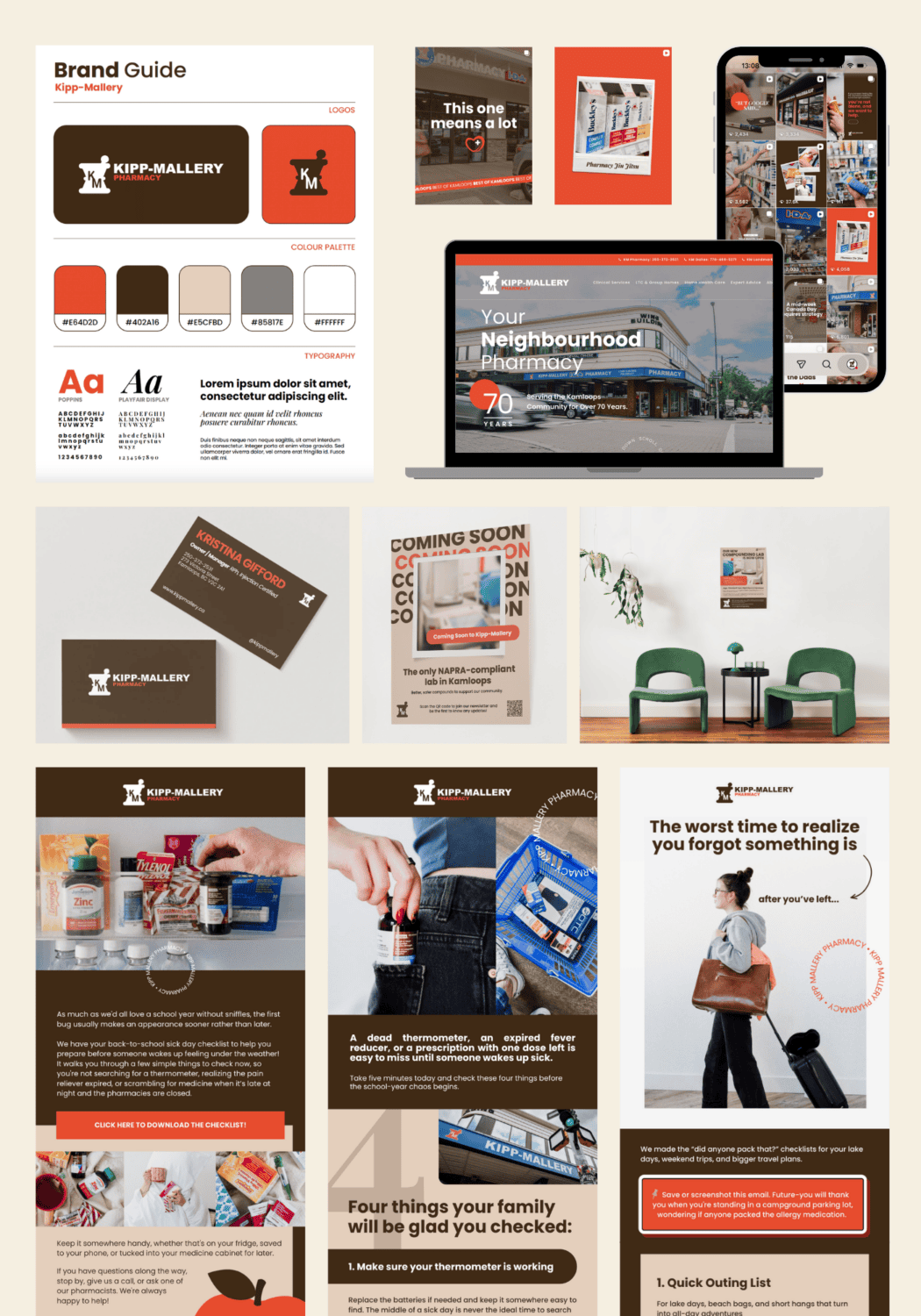
Treating branding as just a logo. Your brand is your voice, colours, fonts, messaging, photography, and how the business shows up everywhere at once. Website, socials, and signage that look like different companies is the fix that comes before more marketing spend, not after.
Relying on referrals. Relying entirely on referrals isn’t a mistake on its own; plenty of businesses run well on word of mouth for years. It becomes one once referrals stop covering the growth you need. Marketing only when business is slow has the same gap: marketing has a built-in delay, so switching it off and on with the seasons just recreates the same slow season on a loop.
Building a Plan That Scales as You Grow
Starting small is smart! One or two channels, managed properly, will usually take you further than trying to show up everywhere with half the time, budget, and attention each one needs. But focus is meant to give you a strong foundation, not to keep your marketing small forever. As your business grows, your marketing should grow with it. You don’t think Nike does marketing the same way they did in 1972, do you?
Think about what made sense when you first started. A simple website, a DIY logo, the owner posting on social media when there was time. Maybe most new business came through word of mouth, so there was little reason to invest beyond that. None of those decisions were wrong; they actually matched the business you had at the time.
The problem starts when the business changes and the marketing does not. You add services, your team grows, your goals change, you’re competing for bigger clients or new markets. Suddenly, the website that once did the job feels dated. Referrals are still coming in, but they are not enough to support your next growth target. One social channel is performing well, but you have opportunities elsewhere you haven’t had the resources to pursue. That’s when scaling starts to make sense.
Before adding another channel or increasing your budget, look at two things. First, is your current marketing working? You should have something worth building on, whether that is consistent leads from SEO, strong engagement on social, paid ads producing qualified traffic, or email generating sales and repeat business. Second, is the business ready for more demand? Your offer should be proven, your sales process should work, and your team should have the capacity to serve additional customers well. More marketing won’t help if the business behind it is already stretched thin.
Once those pieces are in place, you start expanding with purpose. Add the next channel because it supports a clear business goal, not because someone told you your business needs to be everywhere. And every new investment comes with a trade-off. Putting more budget into SEO might mean paid ads wait another quarter. Adding email marketing might come before launching another social platform. Rebuilding the website might matter more than increasing ad spend.
That’s the shape of a real marketing plan for small business: deciding what deserves attention now, what comes next, and what your business can support.

How Pepper Builds Strategy for Small Businesses
If you’ve read this far, you already have the framework. Get clear on your offer and audience, make sure your website and brand can handle the traffic you’re about to send, pick channels on purpose instead of by default, and know the mistakes that quietly drain a budget before they drain yours. If you’re also wondering what a marketing agency actually does with all this, that’s a fair question.
At Pepper, that’s the same process we run internally when we build a marketing strategy for a small business, minus the template, because no single one works for every business. Whether the real gap is your branding rather than more ad spend, or you need professional content before more traffic, that depends on the business in front of us. A discovery call is where we look at the full picture before we’d ever tell you where to spend the next dollar.
Sometimes that conversation ends with “here’s your plan, let’s build it together.” Sometimes it ends with “you’re not ready to spend more yet, let’s fix this piece first,” and we’ll say that even if it’s not the answer that gets us hired. A business that scales the wrong things too early doesn’t end up better off; it just spends faster.
If you’d rather have that conversation with us than build the plan alone, we’re set up for exactly that. If you’re weighing options, our buyer’s checklist for choosing a digital marketing agency is worth a look, even if you don’t pick us. Not ready for a full strategy yet? That’s fine too. Use everything above, build what you can, and come back when you’ve outgrown the DIY version.
No pitch, just a real conversation if you want one. We’re here when you’re ready!
Frequently Asked Questions
- What is a good marketing strategy for a small business on a tight budget? *
It starts with clarity, not tactics: know your offer, your audience, and what you want someone to do once they find you. Make sure your website and brand can handle the traffic you’re sending, since a confusing landing page turns paid attention into a wasted click. Pick one or two channels on purpose instead of spreading your budget everywhere, then give it real time to work before judging or changing course. This is the same order our team at Pepper walks clients through before any budget gets spent.
- How much should a small business spend on marketing per month? *
There isn’t one number or percentage that fits every business, and we’d be lying if we published one just for a tidy answer. The right budget depends on your industry, margins, seasonality, and stage of growth. For context, BDC’s general rule of thumb runs roughly 2 to 5% of revenue for B2B and 5 to 10% for B2C. Useful as a starting reference, not a rule to force onto your business. What matters more is treating marketing as a real operating investment, not whatever’s left over at month’s end.
- What’s the difference between a marketing strategy and a marketing plan? *
A strategy is the direction: who you’re targeting, what you’re prioritizing, and why. A plan is the execution: which channels, what content, what budget, on what timeline. Skip the strategy and jump to a plan, and you get a content calendar that looks busy but isn’t moving anywhere.
- Which marketing channels are worth it for a small business? *
There’s no universal answer, and we’d be skeptical of anyone who gives you one. It depends on your industry, your audience, your goals, and what’s already worked or fallen flat for you. A local service business might get the most from Google and local search, a visual brand from photography and social content. The channels matter less than choosing them on purpose.
- Do I need a marketing strategy if I’m already posting on social media? *
Posting consistently is a tactic, not a strategy. Without a clear goal, it’s activity, not direction. A strategy tells you whether social should even be a priority channel, or whether your time and budget would do more somewhere else.